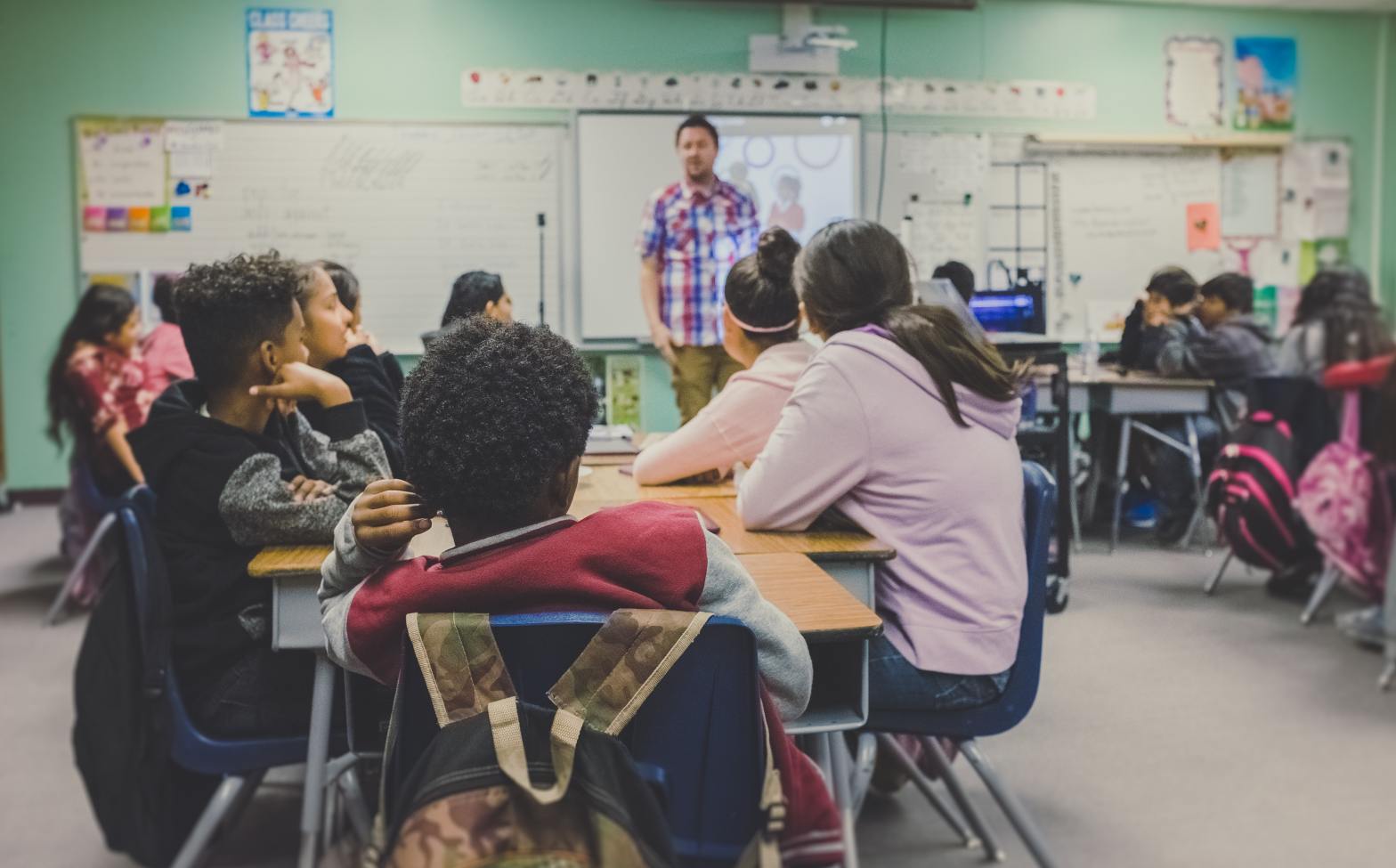
Schools across the nation constantly evolve to meet the needs of a more demanding and ever changing workforce. The curriculum adopted by elementary schools within the Bentonville School district have the best intentions, but may not achieve the desired outcome with the current content based curriculum. The intended curriculum aspires to prepare our students to be not just competitive, but successful in the variety of ways they will eventually serve their communities, but a critical factor of adding in societal-centered is needed in the curriculum to increase its effectiveness.
Current Curriculum
The current curriculum for elementary which is defined for Bentonville School District as K-4, focuses on grade-specific concepts and skills in four content areas: English Language Arts, Mathematics, Science and Social Studies. (Bentonville 2018) The grade-level standards articulate clear goals for students and parents and they are aligned to Common Core State Standards and Arkansas Curriculum Frameworks. This has served the district well as state measures of academic progress place Bentonville as a top district for the state of Arkansas. 9th grade literacy scores at Bentonville Schools confirm that 64.07% of students are ready or exceeding in literacy skills, while the average score for the state of Arkansas is 44.06%.
Addition of Society Factor in Curriculum
While the clarity of focus is appreciated by the community and easily measured, based on my experience over the last 2 years in placing 40 high school students in high quality, career-focused internships, the standard content based curriculum, leaves students unable to weave the content together and bridge the isolated content together in order to problem solve, think critically, and make decisions. This is critical for our students as the World Economic Forum reports that “by 2030 there will be huge demand for higher cognitive skills such as creativity, critical thinking and decision making.” (Jezard 2018). In context to content based curriculum, “The placement of basic concepts and procedures has been perhaps too narrow.” (Klien 1986).
In the research provided in the article, Alternative Curriculum Designs by Frances Klien, multiple research teams have separately identified the concept of a societal-centered curriculum that focuses not only on content, but developing curriculum which connects the content areas and also connects students to their communities and society. “Problems and dilemmas of society are what ought to be studied by students.” (Klien 1986). As noted in the article, Tyler’s syllabus, Basic Principles of Curriculum and Instruction identified society as a critical component of curriculum development. Klien goes on to share that “most curriculum scholars have long advocated the use of both subject-centered and societal-centered. A third research summary in the Kline article by Eisner and Vallance suggested that curriculum look to society as a basis for the substance of curriculum (Klien 2018). In the view of these curriculum experts and my experience with high school students there is another level of curriculum development that is required to make curriculum effective for students. The content knowledge is absolutely essential, but often elementary students view math content as an isolated part of their day and reading as a skill only used during literacy lessons.
Conclusion
Ultimately, schools are correct to focus on content based curriculum, but content only curriculum is not preparing students for the cross-curricular, cross-functional learning needed to be competitive and successful. The missing piece is students’ being able to weave the curriculum across all content in order to solve problems, look at issues with a critical lens and make decisions while weighing the potential outcomes and consequences. These skills are developed from a foundational knowledge of the content, but students also need to apply it in the context our society and how the workforce expects students to be able to utilize their knowledge and skills. Content based curriculum is easy to track and measure, but it limits the ability of the school and the educators from meeting the needs of the students and our community.
References:
- Bentonville Schools Elementary School Student Handbook (July 2018), Bentonville Schools, Retrieved from https://ar02203372.schoolwires.net/site/handlers/filedownload.ashx?moduleinstanceid=32522&dataid=31538&FileName=Elementary%20Schools%20Handbook%202018-2019%20-%20FINAL.pdf
- Jezard, Adam (June 2018) “The 3 key skill sets for the workers of 2030,” World Economic Forum, Retrieved from https://www.weforum.org/agenda/2018/06/the-3-skill-sets-workers-need-to-develop-between-now-and-2030/
- Klein, M.F. (Winter 1986) “Alternative Curriculum Conceptions and Designs,” Theory into Practice: 21. pp. 31-35
- Marzano, Robert J., (2003) What works in Schools: Translating Research into Action, Alexandria, VA, Association for Supervision and Curriculum Development
- Morrow, Jennifer. (June 2019) “Awareness Training Module 1 of 18 Rise Arkansas the Science of Reading Bentonville Schools.” PowerPoint presentation. Bentonville High School. Bentonville, Arkansas. 3 June 2019. Keynote address.
- Munson Lynne (March 2011) “What Students Really Need to Learn”, Educational Leadership, Vol. 68, Issue 6 pp. 10-14 Alexandria, VA, Association for Supervision and Curriculum Development
 Imel Learning